SOBERANA.NETWORK
Home
A member-owned network for licensed fintechs & PSPs

The member-owned stablecoin payment network.

Licensed operators hold the seats, share one stablecoin API — and a defined stake in the network itself is part of the proposed member terms.

Who is building it

Backed by operators. Proven in production.

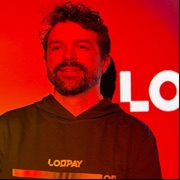
Built by founders
who have already done it
Founder Founder Founder Founder Founder
Draper University 500 Global founders recognized by 500 Global & Draper University programs
Powering live flows for
Prix Alivio Bitxchange Ágil Cash Glosa Glosa Perú🇵🇪 Fully Lemon Arkana Arcore GCGlobal Coin DoPayment
↗1-5Mmobilized per day by the founders' infrastructure
ΣUS$2.2Bmobilized in total across the rails the founders built
⚙37production REST endpoints, live today
◈10+markets on the map — 6 live today: US · MX · BR · CO · EC · PE
The consolidation

The giants are buying the rails.

The giants are consolidating stablecoin infrastructure — and in every deal, the local operators who carried the flows held no stake in the outcome.

Stripe → Bridge
US$1.1B
Closed · Feb 2025
Mastercard → BVNK
up to US$1.8B
Completed · Aug 2026
Nuvei → Payoneer
US$2.75B
Agreed · closes 2027
Circle → Tazapay
US$400M
Agreed · Sep 2026

Compliance, rebuilt per market

A full KYC/KYB/KYT stack, licence and audit — per market, alone.

Retail pricing for wholesale needs

Institutional custody is quote-based with US$1M+ minimums; Circle raised USDC redemption fees in 2026.

Liquidity fragmented at every border

Pre-funded accounts, spread every hop. Aggregators kept the spread.

A supplier in your own market

Platforms KYC your customer and own the terms. You are the invisible last mile.

The market

Stablecoins became payment infrastructure.

B2B stablecoin payments reached an annualized US$226B by December 2025, up 733%. Whoever owns the rails captures the next decade of that flow.

US$226Bannualized B2B stablecoin payments, Dec 2025 · McKinsey × Artemis
US$9Tsettled in stablecoins, 12 months to Sep 2025 (adjusted) · a16z — US$10.2T TTM, Jun 2026 · Visa Onchain
+63%YoY growth in LatAm on-chain value received, 12 months to Jun 2025 · Chainalysis
1.59BBre-B transactions since launch, Oct 2025 – Sep 9, 2026 · Banco de la República
79.8BPIX transactions in Brazil, 2025 · BCB
US$318.8Bcrypto value received by Brazil, 12 months to Jun 2025 · Chainalysis

GENIUS enacted, MiCA in force, Brazil's BCB rules live — reserving stablecoin cross-border flows to authorized providers from October 2026. The window to claim a seat is the window the giants are buying.

The model

One network. Owned by the operators who run it.

The precedent is Visa: member banks formed a cooperative; its 2008 IPO paid those members about US$16B in cash for their seats. In 2026 the largest banks are building jointly-owned stablecoin networks again — for themselves. Soberana opens the same structure to licensed local operators.

21 global banks

A jointly-owned stablecoin company — announced September 1, 2026.

The Clearing House

A shared deposit-token network built by its owner banks.

Early Warning

ZelleUSD — Zelle's own cross-border stablecoin.

Qivalis

37 European banks behind a MiCA euro stablecoin.

Four consortiums, one design — the members own the network. One admission policy: no local fintech, no PSP, no operator outside the club. Soberana is the same move, for the operators the clubs leave out.

SOBERANA MEMBER-OWNED compliance · custody · insurance infrastructure · liquidity · distribution one seat per market — protected territory 🇨🇴 Colombia Bre-B · co-ACH · LIVE 🇪🇨 Ecuador SPI 🇧🇷 Brazil PIX 🇲🇽 Mexico SPEI 🇵🇦 Panama ACH 🇨🇷 Costa Rica SINPE 🇵🇪 Peru Yape · PagoEfectivo 🇺🇸 United States ACH · Wire 🇨🇦 Canada Interac 🇪🇺 Europe SEPA 🇮🇳 India UPI 🇸🇬 Singapore PayNow 🇦🇪 UAE UPTS Your market claim the seat
The model — what membership means

You keep your market. You gain the network.

You keep — sovereignty
  • Your licences
  • Your brand
  • Your client relationships
  • Your pricing power in-market
  • Your P&L

The network never fronts your market or resells your territory.

You gain — ownership at network scale
  • Shared compliance evidence, where regulators permit
  • Custody & insurance programs under structuring
  • Wholesale pricing
  • In-network demand routed to member seats
  • Route-by-route network liquidity
  • Netting between members where legally supported
  • One integration across member markets

Plus the distinction our 24-provider review found nowhere in public terms: a reserved share of any network-level exit, defined in the proposed member agreements.

Shared compliance evidence

Onboard once; other members may reuse the evidence through documented reliance where each regulator permits — every member remains fully responsible.

Custody & insurance: under structuring

Network-level insurance and institutional custody are being structured at network scale; scope and terms are finalized in the member agreements — nothing is promised until signed.

Clients come to you

In-network demand routes to the member seat for that market. The client lands on your paper.

One integration, every member market

Corridors activate as members, permissions and funding come online. One integration replaces a bilateral agreement per corridor.

THE FLYWHEEL each member compounds the value of every other More members More volume Better pricing & liquidity Stronger product More inbound clients

Every member makes the network stronger and cheaper for the ones already in.

The alternatives

Alone, a platform, or a seat.

Three realistic paths. Two are well documented. The third did not exist until now.

DimensionBuild aloneGlobal platform (Bridge–Stripe class)Aggregator (Thunes class)The Soberana Network
ComplianceRebuilt per marketPlatform's licences, platform's termsYours, per marketShared evidence, reused where regulators permit
CustodyRetailPlatform product, fee-basedNot providedProgram under structuring, at network scale
LiquidityPre-funded, full spreadPlatform spreadNetwork keeps the spreadCoordinated prefunding; netting where legally supported
DistributionHome market onlyNone — one of thousands of tenantsNetwork sells; you terminateIn-network demand routed to your seat
Who owns the clientYouShared — end users accept platform termsThe networkYou
TerritoryYours, aloneNoneNone — deliberate redundancyOne seat per country, per rail. Protected territory.
Who owns the network—Their shareholdersTheir shareholdersThe members
When the network exits—Partners: US$0.Partners: US$0.A reserved share for the member pool, defined in the proposed member agreements

We examined 24 platforms and aggregators serving local operators — no publicly disclosed equivalent of partner equity, exit participation, or protected territory; private terms unknown. Every network pays partners fees. Some share yield. None shares itself in public terms.

Platforms sell you rails. Aggregators rent your last mile. Soberana is the network you own.

The product

Live infrastructure, not a whitepaper.

Spun out of Loopay — licensed rails in Colombia, Ecuador and Peru. Not a roadmap: production infrastructure, live today.

Customers, KYC & wallets

Hosted or API onboarding · fiat and multi-chain wallet creation with balances.

Ramps

On-ramps via payment links and virtual accounts · off-ramps to validated bank beneficiaries.

Transfers & FX

Wallet-to-wallet P2P, on-chain outbound · indicative and locked FX quotes with fees.

MarketRailsStatus
United StatesACH · WireLIVE
MexicoSPEILIVE
BrazilPIXLIVE
Colombiaco-ACH · Bre-BLIVE
EcuadorSPILIVE
PeruYape · PagoEfectivoLIVE
Central AmericaACH · SINPEROADMAP
EuropeSEPA · UK FPSROADMAP
India · Singapore · UAEUPI · PayNow · UPTSROADMAP
Your marketYour railsNEXT

API docs & sandbox: API Docs — open for technical due diligence today.

Identity verification by

The seats

One seat per country. Per rail. Protected by the rulebook.

A small, fixed number per country, per rail. The market is never resold around its holder; allocations are protected by the rulebook and conditioned on operating performance.

Seat map
Colombiaco-ACH · Bre-B
EcuadorSPI
PeruYape · PagoEfectivo
BrazilPIX
MexicoSPEI
PanamaACH
Costa RicaSINPE
United StatesACH · Wire
CanadaInterac
EuropeSEPA · UK FPS
IndiaUPI
SingaporePayNow
UAEUPTS
Africa · Middle EastRegional rails

Seat map beyond live markets is illustrative — final markets and structure are set in each member agreement.

How membership works

  • Founding members write the rulebook
  • Seats are performance-based — protected while the member operates to network standards
  • A member holds its authorizations in good standing, meets network standards, and carries flow — ownership is earned by operating
  • Capital commitments are set out in the membership proposal
Route A · Founding members

Founding seat — reciprocal structure

For licensed local fintechs and PSPs with real in-market distribution.

  • Proposed: the member invests in the network; the network takes reciprocal rights in the member
  • The relationship runs in both directions — terms are set in the definitive member agreements
Route B · Institutional members

Capital commitment

For banks, insurers and regulated financial institutions.

  • A larger capital commitment, with board-level governance participation
  • Institutional seats anchor the network's regulatory depth in each region
The economics

Own the rails you run.

The operators who carry the flows hold the seats, share the cost base, and a defined stake in the network itself is proposed in both directions, as set out in the member agreements.

The exit, shared

A reserved share of any network-level exit is set aside for the member pool under the proposed member agreements.

Positions in its members

The network would hold reciprocal rights in each member under the proposed intercompany agreement — scaling costs and negotiating power.

Cost line — illustrative unit-cost model (member alone = 100)AloneWith the network
Cloud & compute10055
Liquidity & FX spread10060
Custody100Under structuring — targeted at network scale

Illustrative model of network versus stand-alone procurement, pending member agreements. Targets, not commitments.

A seat must justify itself without any exit: measurable inbound flow from other members' corridors, lower all-in operating and capital costs, and network liquidity. If the network is never sold, membership still has to be the better way to operate.

Questions

Frequently asked questions.

What is a member-owned payment network?

A payment network designed so the licensed operators who run its seats hold a defined stake, under the proposed member agreements — the Visa and SWIFT model, applied to stablecoin rails.

How is Soberana different from Bridge, BVNK, or other stablecoin APIs?

Platforms onboard your users under their terms and keep the upside. Soberana members integrate a comparable API — and hold a seat with protected territory and a defined stake in the network, under the member agreements.

How is it different from aggregator networks like Thunes or TerraPay?

Aggregators sign the sender as their client and use local institutions as interchangeable payout suppliers. Soberana inverts every term.

How does shared compliance evidence work?

A customer onboarded under network KYC/KYB/KYT standards can have that evidence reused by other members through documented reliance where each regulator permits; every member remains fully responsible for its own decisions and reporting.

How do fintechs join the network?

Licensed fintechs and PSPs apply for a founding seat; banks and regulated institutions apply for an institutional seat. Eligibility and terms are set out in the membership proposal and definitive agreements — it starts with the eligibility application.

Which rails are live today?

United States (ACH, Wire), Mexico (SPEI), Brazil (PIX), Colombia (co-ACH, Bre-B), Ecuador (SPI) and Peru (Yape, PagoEfectivo). Sandbox and documentation are public.

What does a seat demand of a member?

Authorizations in good standing in every market the member operates, the network's compliance and uptime standards, and real flow. Allocations are performance-based — protected while the member operates to network standards.

Is the exit the reason to join?

No. A seat must justify itself on corridor economics — inbound flow, lower all-in costs, shared compliance evidence, network liquidity. The reserved share in any change of control, defined in the member agreements, is the structural difference, not the pitch.

Is this an investment offering?

Nothing on this page is an offer of securities — see the disclaimer below.